
Page Contents
Margaret used to love Sunday lunch with her family. Over the past two years, she began to nod and smile through conversations she could no longer follow. She turned the television up until the neighbours complained, and she stopped answering the phone because the voices sounded muffled. Her family thought she was simply getting quieter with age. In truth, she was slowly losing her hearing.

Hearing loss is one of the most common health conditions in later life, yet it is also one of the most overlooked. Because it creeps in gradually, many older adults do not notice the change, and families often mistake it for distraction, stubbornness or memory problems. With the right support, including hearing aids, older adults can stay connected, confident and engaged with the people they love.
How common is hearing loss?
Hearing loss affects far more people than most of us realise. According to the World Health Organization (WHO), over 430 million people around the world need rehabilitation for disabling hearing loss today. The WHO projects that by 2050, nearly 2.5 billion people will have some degree of hearing loss, and more than 700 million will need hearing rehabilitation.
Age is the strongest factor. The WHO reports that among people older than 60, over 25% live with disabling hearing loss. In the United States, the National Institute on Deafness and Other Communication Disorders (NIDCD) estimates that about one in three people aged 65 to 74 has hearing loss, and nearly half of those older than 75 have difficulty hearing.
The cost of ignoring the problem is high. The WHO estimates that unaddressed hearing loss costs the world almost US$1 trillion every year, through health care, lost productivity and reduced quality of life.
Why hearing fades with age
The most common form is age-related hearing loss, also called presbycusis (pronounced prez-buh-KYOO-sis). It develops slowly as we grow older and usually affects both ears equally. Several factors contribute to it:
- Inner ear changes. The tiny sensory hair cells in the inner ear wear out over time and do not grow back, which makes high-pitched sounds harder to hear.
- Nerve pathway changes. Ageing affects the nerves that carry sound signals from the ear to the brain, so speech can sound unclear even when it is loud enough.
- Noise exposure. Years of loud machinery, traffic, music or power tools can damage the ear and add to age-related changes.
- Chronic conditions. Conditions such as high blood pressure and diabetes are associated with hearing loss.
- Certain medicines. Some medicines, including some chemotherapy drugs, can harm the sensory cells in the ear.
- Earwax and infections. Blocked ear canals and ear infections can muffle sound, and both are often easy to treat.
Early signs you should not ignore
Because hearing loss develops so gradually, family members often notice it before the person does. Watch for these common signs:
- Asking people to repeat themselves often
- Turning up the television or radio louder than others like
- Struggling to follow conversations in noisy places such as restaurants
- Thinking that other people mumble or speak too softly
- Finding the higher-pitched voices of women and children harder to understand
- Avoiding phone calls or social gatherings
- Hearing ringing, buzzing or hissing in the ears, which is known as tinnitus
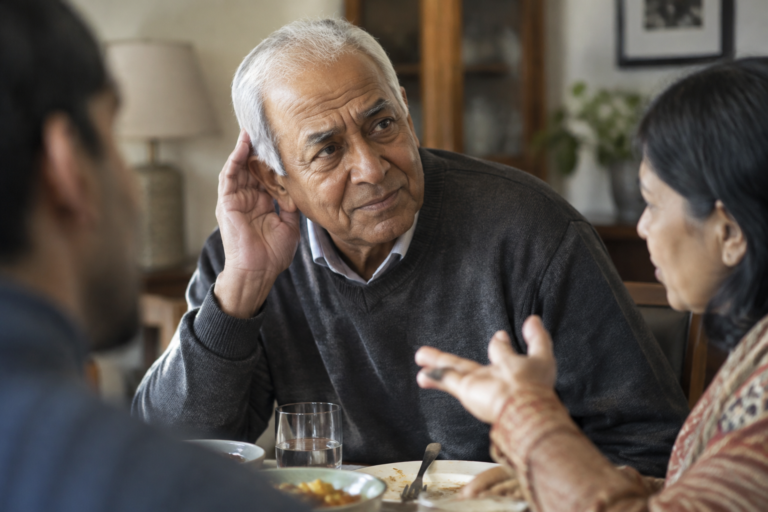
If you or your loved one recognise two or more of these signs, it is worth arranging a hearing test. A simple ear screening with a doctor or audiologist can check the ear canal, the eardrum and the range of sounds you can hear. If hearing drops suddenly in one or both ears, see a doctor urgently, as early treatment matters.
Hidden risks of untreated hearing loss
Hearing loss is about much more than missing a few words. When the brain receives less sound, it has to work harder to make sense of speech. The WHO notes that unaddressed hearing loss is linked to an increased risk of dementia and faster cognitive decline.
The 2024 update of the Lancet Commission on dementia prevention found that hearing loss accounts for about 7% of potentially modifiable dementia risk. The Commission also reported that the evidence that treating hearing loss lowers dementia risk is now stronger than before, and that hearing aids appear particularly effective for people with hearing loss and other risk factors. This makes hearing care one of the most practical ways to protect long-term brain health and memory.
The emotional effects are just as real. Older adults with untreated hearing loss often withdraw from conversations and gatherings because keeping up feels tiring or embarrassing. Over time, this can lead to loneliness and social isolation, frustration and low mood. Hearing loss can also affect safety, because it becomes harder to hear doorbells, alarms, traffic or someone calling out a warning.
Hearing aids and other treatment options
Age-related hearing loss cannot be reversed, but it can be managed very well. Your doctor or audiologist will suggest options based on the type and degree of hearing loss:
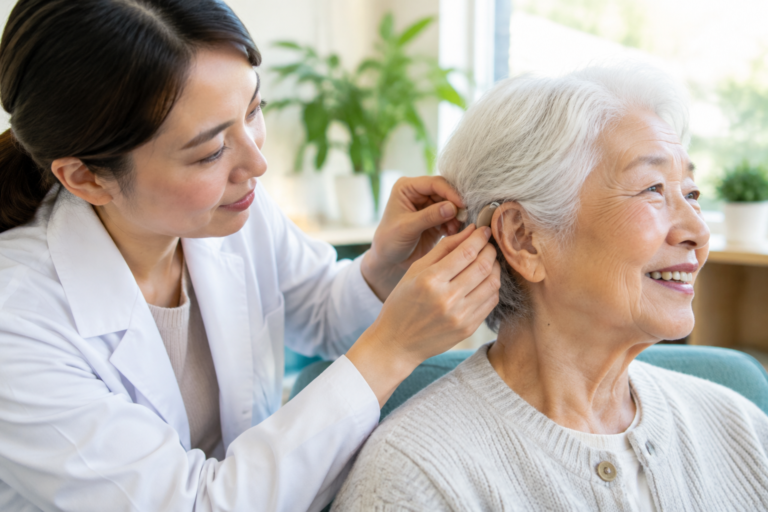
- Hearing aids. These small electronic devices sit in or behind the ear and make sounds louder and clearer. Many modern hearing aids are discreet and connect to smartphones. In some countries, over-the-counter hearing aids are now available for adults with mild to moderate hearing loss.
- Cochlear implants. For people with severe or profound hearing loss who gain little from hearing aids, a surgeon can place a small device in the inner ear that sends sound signals directly to the hearing nerve.
- Assistive listening devices. Phone amplifiers, captioning apps, television streamers and hearing loop systems in theatres and places of worship can make specific situations much easier.
- Earwax removal and medical treatment. A doctor can safely remove impacted earwax or treat an ear infection, which sometimes restores hearing quickly.
Hearing aids work best when they are fitted properly and worn every day. Most people need a few weeks to adjust, as the brain relearns how to process everyday sounds.
Helping a loved one hear and connect
Many older adults resist hearing aids at first because they worry about appearance, cost or admitting that they are ageing. Gentle encouragement and practical support from family can help. These simple habits also make communication with ageing parents much easier:
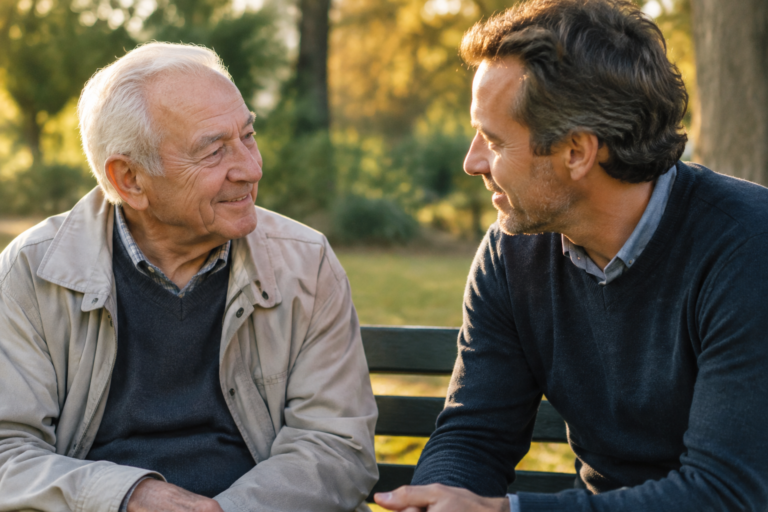
- Face your loved one when you speak so they can see your expressions and lip movements
- Get their attention by saying their name before you start talking
- Speak clearly at a natural pace without shouting
- Turn off the television or move to a quieter spot during conversations
- Offer to attend the hearing test and fitting appointments together
- Remind them to clean, charge and wear their hearing aids daily
Conclusion
Hearing loss is common in later life, but it should never be accepted as a normal part of ageing that you simply have to live with. Untreated hearing loss can quietly chip away at relationships, confidence, safety and brain health. Hearing aids and other treatments can help older adults stay connected with family, friends and the world around them. If you or someone you love shows signs of hearing difficulty, book a hearing test this month and take that first step towards hearing life more fully again.
Caring for our ageing loved ones is a journey filled with questions, challenges, and important decisions. If you are supporting an elderly parent or caring for someone with memory loss, you may be interested in my ebooks:
- When They Need You
- When the Mind Fades
- When the Pills Multiply
- When the Road Narrows
- When the Body Slows Down

These ebooks provide practical guidance, compassionate insights, and real-world advice for families and caregivers.
To learn more about these books and explore additional resources on ageing and eldercare, click the link Here to visit my ebook page. You do not have to navigate the ageing journey alone.