
Page Contents
Robert loved his evening crossword, but lately the newspaper looked as though someone had smeared it with grease. Oncoming headlights dazzled him on the drive home, and the colours of his garden seemed to have faded. He blamed his old glasses and bought a stronger pair from the pharmacy. When his daughter finally took him for an eye examination, the doctor found the real reason: cataracts in both eyes.

A cataract is a clouding of the lens, the clear part of the eye that sits behind the coloured iris and focuses light onto the back of the eye. When the lens turns cloudy, images become blurred, dim and washed out, as if you were looking through a frosted window.
Cataract is one of the most common eye conditions of later life, and it develops so slowly that many people do not notice how much they have lost. The encouraging news is that it is also one of the most treatable causes of poor vision in the world.
How common are cataracts?
The World Health Organization estimates that at least 2.2 billion people worldwide live with some form of near or distance vision impairment. Among the vision problems that could have been prevented or have not yet been treated, cataract is the single biggest cause of moderate to severe distance vision impairment and blindness, affecting about 94 million people.
Age is the strongest driver. WHO notes that most people with vision impairment and blindness are over 50, and that population ageing is increasing the number of people affected. In the United States, the National Eye Institute reports that more than half of all Americans aged 80 or older either have cataracts or have already had surgery to remove them. Access to treatment remains uneven, because WHO estimates that one in two people worldwide who need cataract surgery cannot get it.
What causes cataracts?
Most cataracts form because of normal ageing changes inside the eye. From around the age of 40, the proteins in the lens slowly begin to break down and clump together, making the lens cloudy over many years. Several factors can speed this up:
- The older you are, the higher your risk.
- High blood sugar affects the lens, so good control of diabetes helps protect your eyes.
- Smoking and heavy drinking. Both increase the stress on the delicate tissues of the eye.
- Years of unprotected exposure to ultraviolet light can damage the lens.
- Steroid medicines. Long-term use of steroid tablets or eye drops is linked to certain types of cataract.
- Eye injury or surgery. A blow to the eye or an earlier operation, such as glaucoma surgery, can trigger a cataract.
- Family history. Cataracts can run in families.
Signs and symptoms to look out for
Early cataracts often cause no symptoms at all. As the clouding spreads, you may notice:
- Cloudy, blurry or misty vision
- Colours that look faded, dull or yellowish
- Trouble seeing at night, especially when driving
- Lamps, sunlight or headlights that seem too bright or glaring
- Halos or rings around lights
- Double vision in one eye
- Frequent changes to your glasses prescription that never seem quite right

These signs can overlap with other eye conditions such as age-related macular degeneration, so a proper eye examination is always needed.
How cataract affects daily life
Poor vision does far more than make reading difficult. Blurred sight and glare make it harder to judge steps, kerbs and uneven ground, which raises the risk of falls in older adults and the fractures that can follow. Many older people with cataracts stop driving at night, give up hobbies they love or avoid going out alone.

Over time, this loss of independence can lead to loneliness and low mood. Reading medicine labels becomes harder, which increases the chance of taking the wrong dose. For a person who already lives with memory problems, poor sight can add to confusion. Treating a cataract is therefore about protecting confidence, safety and quality of life as much as eyesight.
Diagnosis and treatment options
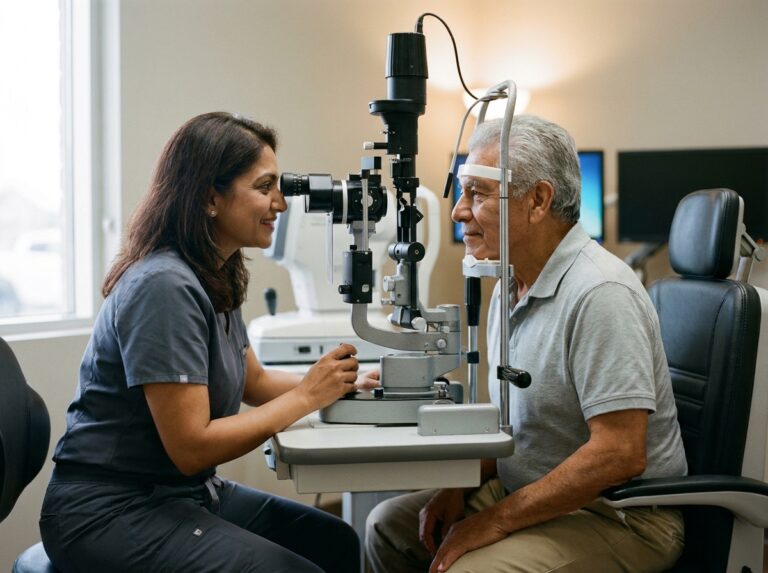
An eye doctor can diagnose a cataract with a simple dilated eye examination, in which drops widen the pupil so that the lens and retina can be checked. The National Eye Institute advises people aged 60 and above to have a dilated eye examination every one to two years.
Managing early cataracts
In the early stages, brighter lighting at home, anti-glare sunglasses, magnifying lenses and an updated glasses prescription can keep you seeing comfortably for some time. Waiting usually does not harm the eye or make later surgery more difficult.
Cataract surgery
Surgery is the only way to remove a cataract. Doctors usually suggest it when poor vision starts to get in the way of daily activities such as reading, driving or watching television. The surgeon removes the cloudy lens and replaces it with a clear artificial lens, called an intraocular lens. The operation is usually done under local anaesthetic as a day procedure.
Expected results
Cataract surgery is one of the most common and safest operations performed today. According to the National Eye Institute, nine out of ten people who have it see better afterwards.
Recovery and protecting your eyes
Recovery is usually quick, but following your eye doctor’s instructions closely helps you heal well. These habits support recovery and long-term eye health:
- Use your prescribed eye drops exactly as directed and attend every follow-up visit.
- Avoid rubbing your eyes, and wear the protective shield at night if you are given one.
- Keep water, soap and dust out of the eye for the first few days.
- Avoid heavy lifting and bending for a short while if your doctor advises it.
- Wear sunglasses and a wide-brimmed hat outdoors to block ultraviolet light.
- Stop smoking and eat plenty of colourful vegetables and fruit.
- Keep up regular eye care as you age, even after successful surgery.
If you have sudden pain, worsening vision, or flashes of light after surgery, contact your eye doctor urgently, or call emergency services immediately if you cannot reach them.
Conclusion
Cataract is a natural part of ageing for many people, but it does not have to steal your independence. Knowing the early signs and having regular eye examinations allows you to act at the right time. For most older adults, a short and safe operation can bring back clear, bright vision and the confidence that comes with it. If your sight has become cloudy or glaring, book an eye examination this month, and encourage an older loved one to do the same.

Caring for our ageing loved ones is a journey filled with questions, challenges, and important decisions. If you are supporting an elderly parent or caring for someone with memory loss, you may be interested in my ebooks:
- When They Need You
- When the Mind Fades
- When the Pills Multiply
- When the Road Narrows
- When the Body Slows Down
- When the Body Fights Back

These ebooks provide practical guidance, compassionate insights, and real-world advice for families and caregivers.
To learn more about these books and explore additional resources on ageing and eldercare, click the link Here to visit my ebook page. You do not have to navigate the ageing journey alone.