
Page Contents
Falls are one of the most common and serious health concerns affecting older adults. A fall is sometimes dismissed as an accident, but in geriatric care, every fall should be treated as an important clinical event. A fall may reveal an underlying health problem, an environmental hazard, or a decline in mobility and balance.
For older adults, the consequences can extend far beyond the initial injury. A fall may lead to fear of walking, reduced activity, muscle weakness, loss of independence, and another fall. Good fall management therefore involves two stages: knowing what to do after a fall and, more importantly, understanding why the fall happened in the first place.
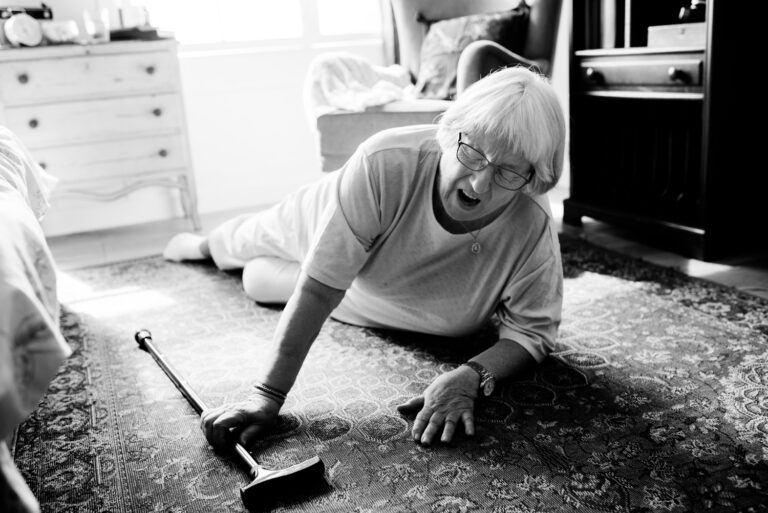
Falls are common in older adults
Falls become increasingly common as people age. Changes in muscle strength, balance, vision, reaction time, medications, chronic diseases, and mobility all contribute to increased risk.
The World Health Organization estimates that 684,000 people die from falls worldwide each year. Adults over 60 years experience the highest number of fatal falls. Around 37.3 million falls each year are severe enough to require medical attention.
In the United States, more than one in four adults aged 65 and above falls each year. Fall-related death rates have also increased over time. As populations continue to age, falls are likely to become an even greater concern for families, healthcare systems, and nursing homes.
How serious can it be?
A fall does not have to result in a fracture to be serious. Older adults are more vulnerable to injuries because ageing is associated with reduced bone density, slower tissue recovery, weaker muscles, and less physiological reserve.
Possible consequences include:
- Bruising and soft tissue injuries
- Fractures, particularly hip fractures
- Head injuries
- Traumatic brain injury
- Loss of mobility
- Hospitalisation
- Functional decline
- Fear of falling
- Social withdrawal
- Increased dependence
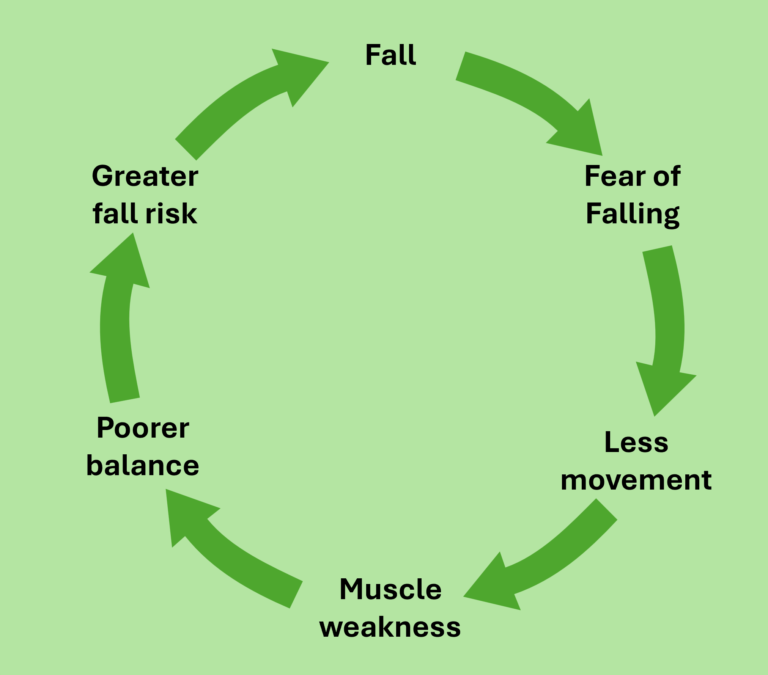
The psychological impact is sometimes overlooked. An older person who falls may become afraid to walk again. They start sitting more often. Their activity decreases. Their muscles become weaker, their balance deteriorates, and their confidence falls further.
This creates a vicious cycle as shown. Breaking this cycle early is an important part of fall management.
What a caregiver should do after a fall?
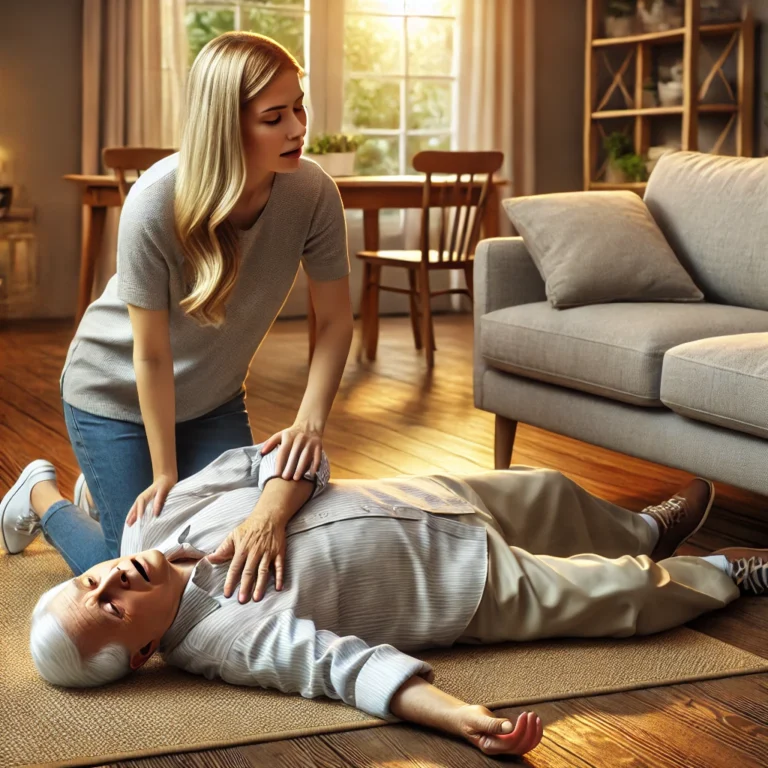
When a fall occurs, remain calm and stay with the resident. First, ensure the surrounding area is safe and prevent further hazards while help is being arranged.
Identify what happened as soon as the resident is able to communicate. Ask simple questions such as where they were going, what they were doing, and whether they remember how they fell. Observe their behaviour, level of alertness, movement, and general condition.
Conduct an appropriate post-fall assessment. This should include checking for pain, bleeding, changes in consciousness, unusual behaviour, reduced movement, and other signs of injury. Record vital signs when indicated and compare them with the senior’s usual condition.
Pay particular attention to changes from baseline. A resident who suddenly becomes confused, drowsy, weak, or unsteady may require further medical assessment even when there is no obvious injury.
Once the resident has been assessed and managed, document the incident clearly. Record the circumstances, assessment findings, interventions, medical review, and notifications.
The immediate response should protect the resident. The post-fall review should help the care team understand what happened and determine what needs to be changed.
What a caregiver shouldn’t do after a fall?
Knowing what not to do is equally important. The first mistake to avoid is immediately lifting the resident from the floor. Moving someone with a suspected fracture, spinal injury, or head injury may worsen the injury. Do not ask the resident to stand or walk until an appropriate assessment has been completed.
Do not assume the resident is fine simply because there is no obvious injury. Older adults may have significant injuries without obvious external signs, and symptoms such as confusion, dizziness, or increasing pain may appear later.
Do not leave the resident unattended while waiting for assistance. Stay with them, keep them comfortable, reassure them, and continue monitoring their condition. Do not move equipment, clean up the area, or alter the environment before documenting relevant findings, unless immediate action is required to prevent further harm.
Most importantly, do not treat a fall as an isolated incident and move on. Every fall should trigger a review of what happened, why it happened, and what needs to change to reduce the risk of another fall.
What if there is an injury or suspected injury?
If the resident has severe pain, obvious deformity, significant bleeding, suspected fracture, head injury, loss of consciousness, altered consciousness, or other signs of serious injury, treat the situation as an emergency.
Do not force the resident to stand or walk. Keep the resident still and seek appropriate medical assistance. If a spinal, neck, or major musculoskeletal injury is suspected, unnecessary movement should be avoided until appropriately assessed.
Even when there is no obvious injury, an older adult should be monitored after a fall because some injuries or complications are not immediately apparent.
A fall involving loss of consciousness, a suspected head injury, anticoagulant use, new neurological symptoms, persistent vomiting, severe headache, or deterioration in mental status warrants prompt medical assessment.
Investigate what caused the fall
Once the immediate safety issue has been addressed, the next question should be: “Why did this person fall?“. This is where fall management becomes fall prevention.
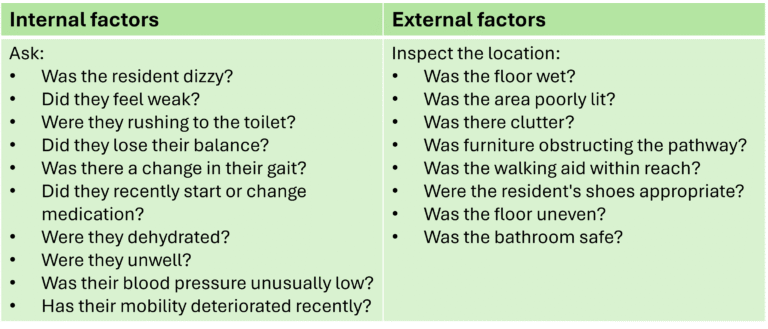
The environment should be examined exactly as it was when the fall occurred. Fixing the hazard immediately is important, but understanding why the hazard existed in the first place is even more valuable.
Work upstream, not only after the fall
We should not wait for residents to fall before taking action. Fall prevention should begin with proactive risk assessment, and all interventions should then be individualised.
Regularly assess:
- Mobility and gait
- Balance
- Muscle strength
- Vision
- Medication risks
- Continence and toileting needs
- Nutrition and hydration
- Footwear
- Walking aids
- Environmental hazards
- Previous falls
- Fear of falling
Exercise and strength training, balance training, appropriate walking aids, medication review, environmental modification, adequate nutrition, hydration, and appropriate footwear all have roles in fall prevention. WHO identifies gait, balance and functional training, Tai Chi, home assessment and modification, medication review, and multifactorial interventions among strategies for older adults.
The goal should not be to eliminate every possible risk by restricting residents’ movement. Excessive restriction may create another problem: deconditioning.
Older adults need opportunities to move, exercise, walk, and participate in daily activities. Good fall prevention therefore balances safety with independence and quality of life.
Conclusion
A fall is an event. Fall management is a process. The immediate response protects the resident from further harm. The investigation tells us why the fall happened. The preventive intervention helps stop the next fall.
For nursing homes, reporting and documentation are essential because every incident provides an opportunity to learn. More importantly, organisations should look upstream. Instead of asking only, “What do we do after someone falls?”, we should also ask, “What could we change today so this person does not fall tomorrow?”
Effective fall management is therefore not about detecting falls faster. It is about understanding risk earlier, strengthening residents’ abilities, improving the environment, and preventing avoidable falls before they happen. The best fall management strategy is prevention.
Caring for our ageing loved ones is a journey filled with questions, challenges, and important decisions. If you are supporting an elderly parent or caring for someone with memory loss, you may be interested in my ebooks:
- When They Need You
- When the Mind Fades
- When the Pills Multiply
- When the Road Narrows
These ebooks provide practical guidance, compassionate insights, and real-world advice for families and caregivers.
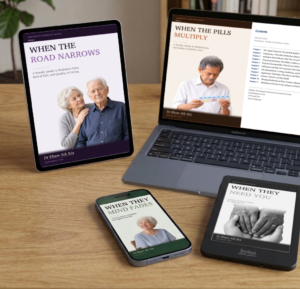
To learn more about these books and explore additional resources on ageing and eldercare, click the link Here to visit my ebook page. You do not have to navigate the ageing journey alone.