
Page Contents
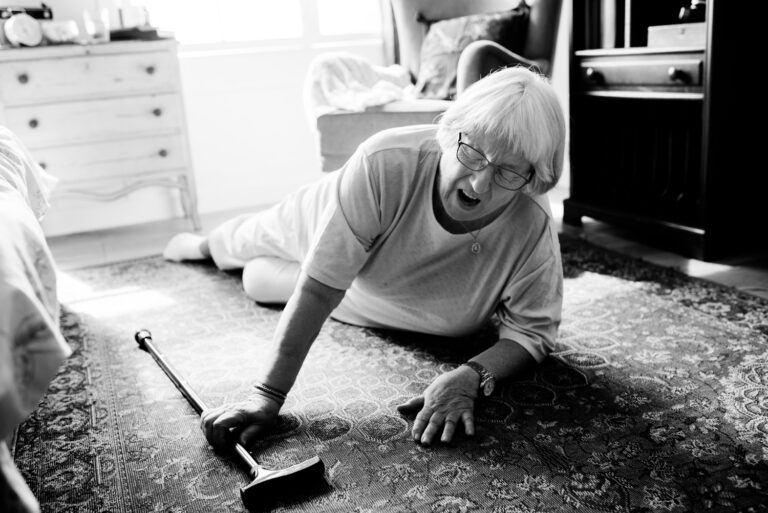
An 85-year-old woman living in Singapore’s Community Care Apartment fell in her bathroom after taking a shower. She injured her hip and could not stand. She pressed the emergency call button installed in her apartment. According to the account reported, she heard a voice after activating the system and believed that help had been alerted. She waited, but no one came.
For more than two hours, she remained on the floor. She was wet, undressed and cold. Eventually, she used her remaining strength to drag herself towards the main door, using her walking stick to help open it and call for assistance. A neighbour and passers-by eventually noticed her, and an ambulance was called at around 3pm. She was taken to nearby hospital and underwent surgery for a hip fracture on the same day. Read the original report.
There is an important question here that goes beyond this individual case: What happens when we all trust an emergency system, but the system does not deliver the emergency response expected of it?
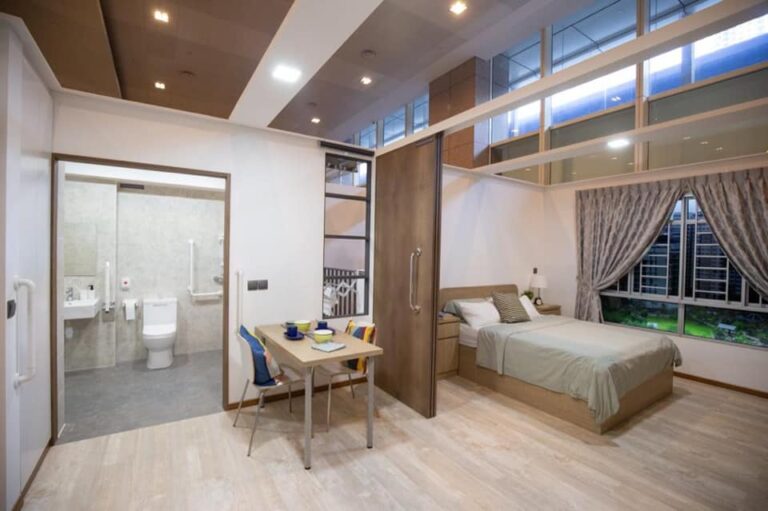
What is a Community Care Apartments?
What went wrong?
Based on the information publicly available, several potential gaps deserve examination.
The first problem: an alert may have been generated, but the emergency response did not appear to follow
The most concerning part of the story is not simply that the woman fell. Older people will fall despite good prevention programmes, careful environments and modern technology. The critical issue is what happened after she pressed the emergency button.
The reported account says that she heard what she believed was a response, but later learnt that it was an automated response. No one apparently came to her apartment to check on her.
This raises several questions:
- Was the alert successfully transmitted?
- Did the system register the alert?
- Was the alert received by a staff member?
- Was someone assigned to respond?
- Was there an escalation process if nobody responded?
- How long was the expected response time?
- Was the resident’s unit identified correctly?
- Was the system functioning normally?
- Was there a communication failure?
- Was the automated voice sufficiently clear that a resident would understand that it was only an acknowledgement and not confirmation that a person was coming?
These are not minor technical questions. They are questions about the reliability of a life-safety system.
The second problem: an automated acknowledgement is not the same as human response
This may be the most important lesson. Technology can tell a resident: “Your call has been received.”. But the resident may interpret this as: “Someone knows I am in trouble and is coming.”
Those are two very different things. For an older person lying injured on a bathroom floor, the distinction can be critical.
A good emergency system should make it absolutely clear whether the resident has reached:
- an automated system;
- a staff member;
- an emergency monitoring centre; or
- emergency services.
The resident should not have to guess.
How serious could this have become?
A hip fracture is already a serious event for an older person. But the consequences could have been much worse. Imagine several possible scenarios.
A head injury
A fall in the bathroom can involve a head injury. An older person may initially appear conscious and relatively well but deteriorate later. If nobody checks on the person for two hours, an intracranial bleed or other serious injury could remain untreated.
A stroke or cardiac event
Not every collapse is simply a mechanical fall. A person may fall because of a stroke, heart rhythm problem, heart attack, fainting episode, low blood pressure or another acute medical condition.
The fall may be the symptom, not the cause. That is why an emergency call should trigger human assessment rather than simply an automated acknowledgement.
Prolonged immobility
Remaining on the floor for a prolonged period can cause additional problems, including dehydration, hypothermia, pressure injury, muscle damage and worsening pain. An injured person may also try to move independently because of desperation. That creates another risk.
A second injury while trying to escape the situation
The woman reportedly had to drag herself towards the door because nobody came. Her determination may have saved her.
But from a clinical perspective, asking an injured older person to solve an emergency by crawling, dragging herself or attempting to open a door creates another opportunity for injury.
Psychological trauma
There is also an emotional consequence that is easy to overlook. The woman’s daughter reported that her mother thought she was going to die and prayed while trying to survive.
For an older person, the psychological message may become: “When I need help, nobody will come.”. That can create fear, loss of confidence and reduced willingness to live independently.
An assisted-living model is supposed to provide confidence to age in place. A serious failure of emergency response could have the opposite effect.
The deeper question: who is responsible?
It is tempting to identify one person to blame.
- Perhaps the staff member did not respond.
- Perhaps the technology failed.
- Perhaps the resident misunderstood the automated message.
- Perhaps the escalation process was inadequate.
- Perhaps someone assumed another person was responding.
But complex care incidents rarely have a single root cause.
The better question is: Why was it possible for an 85-year-old injured resident to activate an emergency system and remain without physical assistance for more than two hours? Responsibility should therefore be examined at several levels.
The technology
- Was the emergency button functioning?
- Was the signal transmitted correctly?
- Was there a monitoring system?
- Was there an acknowledgement?
- Was the alert logged?
- Was the system able to identify the apartment immediately?
- Was there a backup if the primary system failed?
The staff and workflow
- Who was responsible for responding?
- Was the responsible person physically present?
- What was the expected response time?
- What happens when the first responder cannot respond?
- Was there an escalation procedure?
- Were staff adequately trained?
- Were response responsibilities clearly understood during breaks, shift changes or periods of reduced staffing?
The management system
- Was emergency response regularly audited?
- Were response times tested?
- Were simulated emergencies conducted?
- Were “near misses” analysed?
- Did management know whether the system worked reliably in real-life situations rather than merely knowing that the equipment was operational?
The resident
There is also a resident-related component, but it must be handled carefully. Older people have different levels of hearing, vision, cognition, mobility and health. A system designed for a healthy 65-year-old may not work equally well for an 85-year-old with hearing impairment or mobility limitations. This is why person-centred emergency planning matters.
The resident should know:
- What happens when I press this button?
- Who will respond?
- How long should I wait?
- What should I do if nobody comes?
But this should never become an excuse for transferring responsibility to the resident. An emergency system should be designed around the reality of the people who use it.
Are we becoming too dependent on technology?
Technology is extremely valuable in eldercare. Singapore is already using technology-enabled monitoring and response services to support seniors living in the community. MOH has described 24/7 technology-enabled monitoring and response as part of enhanced Home Personal Care services, including technology to detect falls and incidents. There is nothing wrong with using technology.
The problem occurs when technology becomes a substitute for care rather than an enabler of care.
- A call bell is not care.
- A fall detector is not care.
- A sensor is not care.
- A camera is not care.
- Artificial intelligence is not care.
- They are tools that help people deliver care.
- The final safety net remains human.
This distinction is particularly important in assisted living. The purpose of technology should be to allow older people to remain independent while making help available when independence is no longer enough.
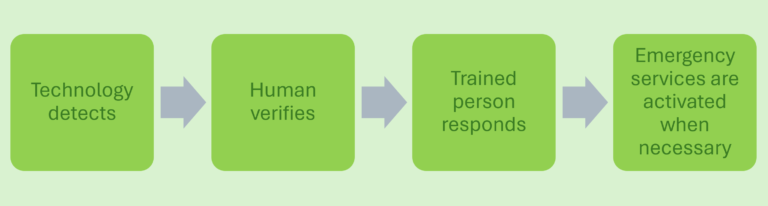
Technology should therefore operate within a layered safety system (below), if any link breaks, the system becomes vulnerable.
How common are falls among older people?
Falls are not unusual events among older adults. A Singapore prospective cohort study found that 9.6% of community-dwelling adults experienced a fall over one year. Older age and pre-frailty were among the important risk factors. Earlier Singapore clinical guidelines reported that the majority of falls among older adults occurred at home, highlighting the importance of the home environment in fall prevention.
Globally, falls are a major public-health problem. WHO estimates that around 684,000 people die from falls each year, with adults over 60 experiencing the greatest number of fatal falls. Millions more falls are serious enough to require medical attention.
Therefore, the question should not be: “How can we make sure an elderly person never falls?”. That is unrealistic.
The better questions are:
- Can we reduce the likelihood of falling?
- Can we detect a fall quickly?
- Can we get help to the person quickly?
- Can we prevent a minor fall from becoming a major disability?
That is where good eldercare makes a difference.
How can we do better?
First, test the whole emergency response chain
It is not enough to test whether the button works. An organisation should regularly conduct simulated emergency calls.
- Press the button.
- Does the alert appear?
- Who receives it?
- How quickly?
- Who goes to the unit?
- What happens if the first person does not respond?
- What happens after five minutes?
- What happens after ten minutes?
- Is there escalation?
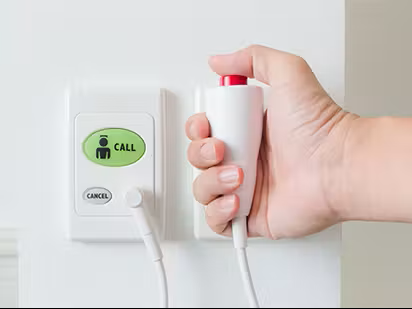
A system should be tested from button activation to physical arrival, not simply from button activation to a computer screen.
Second, establish clear response-time standards
“24-hour emergency response” should mean more than someone being available somewhere in the system. Residents and families should understand what emergency response actually means. For example:
- alert received;
- acknowledgement;
- human verification;
- physical response;
- escalation if there is no response;
- activation of SCDF or other emergency services when indicated.
The exact operational targets should be determined by the provider and regulatory requirements, but they should be measurable. If response time cannot be measured, it cannot be properly managed.
Third, eliminate ambiguity between technology and human response
If the system uses an automated voice, the message should be unmistakable. Instead of creating uncertainty, it should communicate something such as:
“Your emergency call has been received. A staff member is being alerted. Please remain where you are if it is safe to do so.”
And if the call has only reached an automated system, it should say so. An elderly person should never have to wonder whether someone has actually heard the call.
Fourth, provide a backup pathway
Every emergency system needs redundancy. If the technology fails, there must be another way to summon help.
This could include:
- a secondary call mechanism;
- direct telephone access;
- staff patrols or welfare checks for higher-risk residents;
- neighbouring-community support;
- escalation to emergency services;
- family notification where appropriate.
Singapore’s earlier experience with emergency alarm systems in senior housing has already highlighted that reliable response can require several parties, including housing, care providers, emergency services and neighbours to work together.
Fifth, reassess residents as their needs change
A person may move into assisted living when they are relatively independent. But three years later, the same person may have become frailer.
- Perhaps walking has slowed.
- Perhaps balance has deteriorated.
- Perhaps vision or hearing has worsened.
- Perhaps the person has developed cognitive impairment.
- Perhaps they now need assistance with showering.
The care model cannot remain static simply because the apartment has remained the same.
MOH describes Community Care Apartments as being designed for seniors with low to moderate care needs, with care and support that can be customised according to individual needs. That means ongoing reassessment is essential.
Sixth, treat bathrooms as high-risk environments
Bathrooms deserve particular attention. Wet floors, transfers, turning, bending, getting in and out of showers and using the toilet all create opportunities for falls.
Older residents should be assessed for:
- balance and mobility;
- ability to transfer safely;
- appropriate walking aids;
- grab-bar positioning;
- shower seating;
- floor surfaces;
- lighting;
- footwear;
- medication-related dizziness;
- postural hypotension;
- visual impairment.
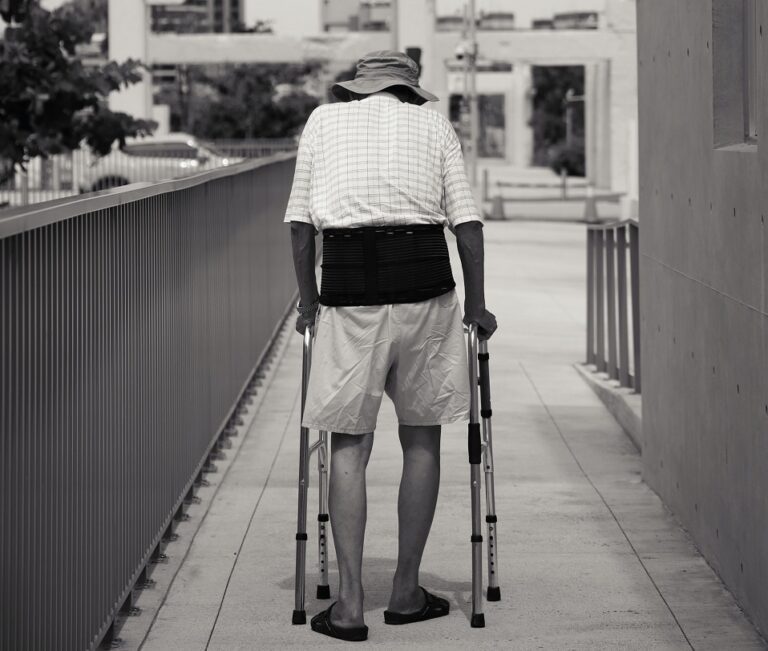
Fall prevention is not simply about installing grab bars. It is about matching the environment to the person’s actual functional ability.
Seventh, learn from every incident, including near misses
A good organisation does not wait for a fatality before improving its system. A resident who presses an emergency button accidentally is not necessarily an irrelevant event. A call that takes ten minutes to reach staff is not necessarily “nothing happened”. A sensor that fails during testing is not a minor technical issue. These are warning signals.
Organisations should monitor: response time, missed alerts, false alarms, equipment failures, near misses, falls, injuries and escalation failures. Patterns become visible when these events are reviewed systematically.
Independence does not mean being left alone
There is an important philosophical issue behind this incident. Singapore is developing more ways for older people to age in the community. This is a positive direction. MOH’s latest data show that around 40% of people aged 75 and above lived alone or only with another senior in 2025, and about one in four of these seniors required assistance with at least one activity of daily living. Community Care Apartments are part of the answer.
But independent living does not mean unsupported living. An older person should be able to live in their own home, make choices, cook, shower, exercise, meet friends and maintain privacy. At the same time, there must be a reliable safety net when something goes wrong.

That is the fundamental promise of assisted living. The goal should not be to turn every apartment into a nursing home. Nor should it be to put technology into an apartment and assume that the problem has been solved. The goal is to create an environment where independence and safety coexist.
Conclusion
The incident at Harmony Village should not become an argument against Community Care Apartments, assisted living or technology. Those are important developments for an ageing society. Instead, it should become an opportunity to ask whether our systems are ready for the realities of ageing.
Falls will happen. Emergency buttons will sometimes be pressed accidentally. Sensors will occasionally fail. Residents may not hear instructions clearly. Technology will sometimes malfunction. Staff may be busy. These things are inevitable in any complex care system.
What matters is whether the system has enough safeguards to prevent one failure from becoming a tragedy. An emergency button should never be considered successful merely because it produces a sound or sends a signal.
The real test is whether a person arrives when an older person needs help. Technology should detect the problem. Systems should trigger the response. People should provide the care. And management should continuously test whether all three are working together.
For older people choosing assisted living, this incident also offers an important lesson: when considering a care apartment or ageing-in-place arrangement, do not ask only about the size of the apartment, facilities, activities or monthly fees.
Ask: “If I fall at 2am and cannot get up, exactly who will come, how will they know, and how quickly will they reach me?”. That may be one of the most important questions an older person can ask before deciding where and how to age.
Caring for our ageing loved ones is a journey filled with questions, challenges, and important decisions. If you are supporting an elderly parent or caring for someone with memory loss, you may be interested in my ebooks:
- When They Need You
- When the Mind Fades
- When the Pills Multiply
- When the Road Narrows
These ebooks provide practical guidance, compassionate insights, and real-world advice for families and caregivers.
To learn more about these books and explore additional resources on ageing and eldercare, click the link Here to visit my ebook page. You do not have to navigate the ageing journey alone.