
Page Contents
From the moment we are born, we begin a natural journey through life. Advances in healthcare, nutrition, sanitation, and medical technology have significantly extended human lifespan, but no one can avoid death forever.
As we age, the body’s organs gradually become less efficient. The risk of chronic diseases such as heart disease, cancer, stroke, dementia, and kidney failure increases. While many older adults continue to enjoy active and meaningful lives, the reality is that death becomes a more common consideration in later years.
Accepting mortality is not about giving up on life. Rather, it allows us to focus on living meaningfully, maintaining relationships, and preparing thoughtfully for the future.
Statistics of death
Human life expectancy has increased dramatically over the past century. Globally, average life expectancy is approximately 73 years. However, lifespan varies significantly across countries due to differences in healthcare, socioeconomic conditions, lifestyle, and public health systems.
Women consistently outlive men in almost every country. On average:
- Men live approximately 70 to 73 years
- Women live approximately 75 to 78 years
Some countries with among the highest life expectancies include:
- Singapore: approximately 84 years
- Japan: approximately 84 years
- Switzerland: approximately 84 years
- Australia: approximately 83 years
In contrast, some lower-income countries continue to have life expectancies below 65 years. While these figures represent averages, individual lifespan varies widely depending on genetics, lifestyle, health conditions, and social support.
What is end-of-life?
Many people wonder what actually happens during the final stage of life. End-of-life refers to the period when a person is approaching death due to advanced age, terminal illness, or irreversible organ failure. This period may last days, weeks, or sometimes months. Although the physical changes can be distressing for family members to witness, they are often a natural part of the dying process.
Common changes during the dying process include:
- Reduced appetite and thirst
The body requires less energy as organ systems slow down. Many individuals gradually eat and drink less. - Increasing sleepiness
People often spend more time sleeping and may become less responsive to their surroundings. - Sensory changes
Hearing is often believed to be one of the last senses to remain intact. Individuals may still hear loved ones speaking even when they appear unresponsive. - Changes in breathing
Breathing patterns may become irregular, with periods of rapid breathing alternating with pauses. - Reduced circulation
Hands and feet may become cool, and skin color may change due to reduced blood flow. - Heart and brain function
Death is medically determined when circulation permanently stops or when there is irreversible loss of all brain function, known as brain death.

Can we decide our death?
The question of whether individuals should be allowed to choose the timing of their death remains one of the most debated ethical issues worldwide. Euthanasia refers to a physician intentionally administering medication to end a person’s life at the patient’s request under specific legal conditions.
Only a limited number of countries permit some form of euthanasia or physician-assisted dying, including Netherlands, Belgium, Luxembourg, Canada, Spain, New Zealand, Colombia, etc. Several jurisdictions in the United States also permit physician-assisted dying under strict regulations. While most countries, including Singapore and many Asian nations, do not permit euthanasia.
Supporters argue that it provides autonomy and relief from unbearable suffering. Opponents raise concerns regarding ethics, vulnerable populations, and the value of human life. Regardless of personal views, euthanasia remains distinct from allowing natural death through appropriate end-of-life care.
Do Not Resuscitate (DNR) vs Euthanasia
Many people mistakenly assume that a Do Not Resuscitate order is a form of euthanasia. They are fundamentally different.
A DNR instructs healthcare professionals not to perform cardiopulmonary resuscitation (CPR) if the person’s heart stops beating or breathing stops. Under a DNR:
- Medical care continues
- Pain relief continues
- Comfort measures continue
- Nursing care continues
- Family support continues
The intention is not to cause death but to allow a natural death without aggressive resuscitation attempts that may be futile or burdensome. Euthanasia, on the other hand, involves actively ending life through medical intervention where legally permitted. One allows natural death. The other actively causes death.
What happens after death?
After death, medical professionals formally certify death and support the family through the next steps.
Many people choose to consider organ and tissue donation. Organ donation allows healthy organs to help save or improve the lives of others.
In Singapore, organ donation is governed primarily through the Human Organ Transplant Act (HOTA), where eligible individuals are included unless they choose to opt-out. Certain organs such as kidneys, liver, heart, and corneas may be donated under specific conditions.
Beyond organ donation, many families find comfort in discussing personal wishes regarding funeral arrangements, religious practices, memorial services, and legacy planning.
Preparing these preferences in advance often reduces stress and uncertainty for loved ones.

Advance Medical Directive (AMD) and Lasting Power of Attorney (LPA)
Planning ahead is one of the greatest gifts we can give our families.
- Advance Medical Directive (AMD)
An AMD allows a person to indicate in advance that extraordinary life-sustaining treatment should not be used to prolong life when terminally ill and death is imminent. The AMD only applies under very specific medical circumstances and is activated after careful assessment by healthcare professionals.
- Lasting Power of Attorney (LPA)
A LPA allows a person to appoint trusted individuals to make decisions on their behalf if they lose mental capacity in the future.These decisions may include:
- Financial matters
- Property management
- Personal welfare decisions

While the AMD addresses future medical treatment preferences, the LPA addresses decision-making when capacity is lost. Together, these documents help ensure that a person’s wishes remain respected.
The importance of end-of-life conversations
Many families wait until a medical crisis occurs before discussing end-of-life wishes. Unfortunately, this is often when emotions are highest and decision-making becomes most difficult.
Early conversations allow family members to understand:
- Preferred place of care
- Preferred place of death
- Religious or spiritual wishes
- Medical treatment preferences
- Funeral arrangements
- Personal values and priorities
These discussions often bring clarity and peace rather than fear.

Conclusion
Death is a natural part of life. While it remains a sensitive subject, avoiding conversations about death does not prevent it from happening. Instead, it often leaves families unprepared when difficult decisions arise.
Talking openly about end-of-life wishes, Advance Medical Directives, Lasting Powers of Attorney, organ donation, and personal values allows families to navigate future challenges with confidence and unity.
Death itself is not something to fear. Uncertainty, confusion, and unresolved disagreements are often far more distressing. By planning early and having honest conversations, we can help our loved ones honour their wishes and focus on what truly matters: spending meaningful time together while we are still here.
Caring for our ageing loved ones is a journey filled with questions, challenges, and important decisions. If you are supporting an elderly parent or caring for someone with memory loss, my ebooks, When They Need You: A Family Guide to Caring for Aging Parents and When the Mind Fades: A Family Guide to Dementia and Cognitive Decline, provide practical guidance, compassionate insights, and real-world advice for families and caregivers.
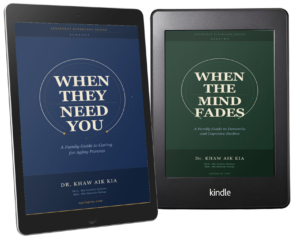
To learn more about these books and explore additional resources on ageing and eldercare, click the link Here to visit my ebook page. You do not have to navigate the ageing journey alone.